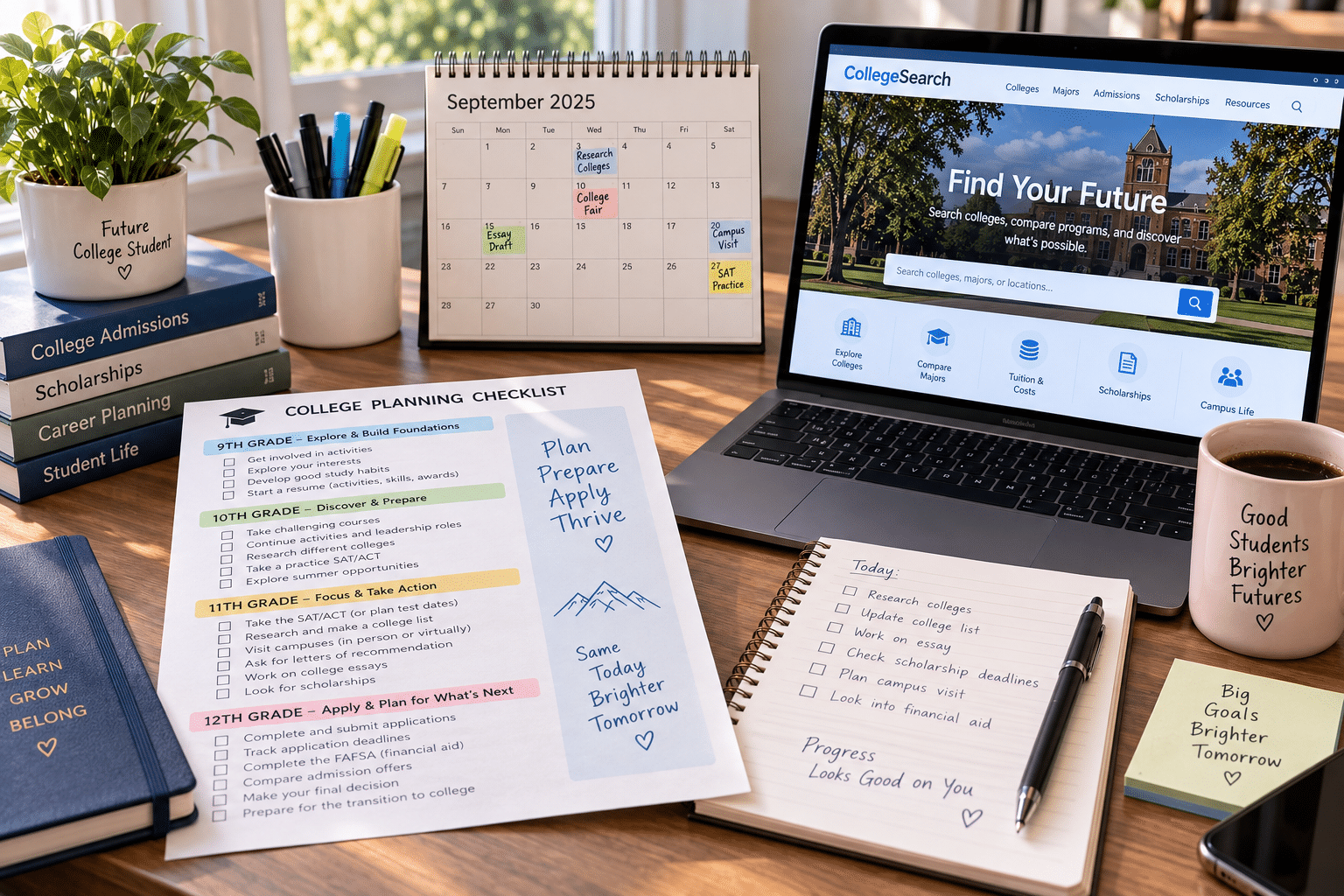
Freshman year is for building a strong GPA and exploring activities; sophomore year adds the PSAT and early test prep; junior year is for standardized testing, narrowing your college list, and starting essays; senior year is for finalizing applications, FAFSA, and decisions. Starting in 9th grade rather than waiting until junior year gives students far more room to build a competitive application without last-minute stress.
How This Relates to College Planning Source
College Planning Source structures its programs around this exact year-by-year progression: Early College Planning for 9th graders, Prime College Planning for 10th and 11th graders, and Crucial College Planning for 12th graders, alongside ongoing Essential College Funding guidance. The company also offers a free interactive high school-to-college admissions timeline and a complimentary one-on-one planning assessment with a Certified College Planning Counselor.
Quick Takeaways
- The college admissions timeline breaks into four stages: 9th grade (foundation-building), 10th–11th grade (testing and list-building), 12th grade (applications and decisions), and financial planning, which should start as early as possible.
- Students typically take the PSAT in 10th and/or 11th grade, and the 11th-grade sitting also qualifies students for National Merit recognition.
- The Common Application typically opens August 1 of senior year; most Early Action and Early Decision deadlines fall around November 1.
- FAFSA opens October 1 each year for the following academic year and should be filed as early as possible to maximize aid eligibility.
- College Planning Source offers a free interactive admissions timeline and a complimentary assessment with a Certified College Planning Counselor.
What Should Freshmen (9th Grade) Focus On?
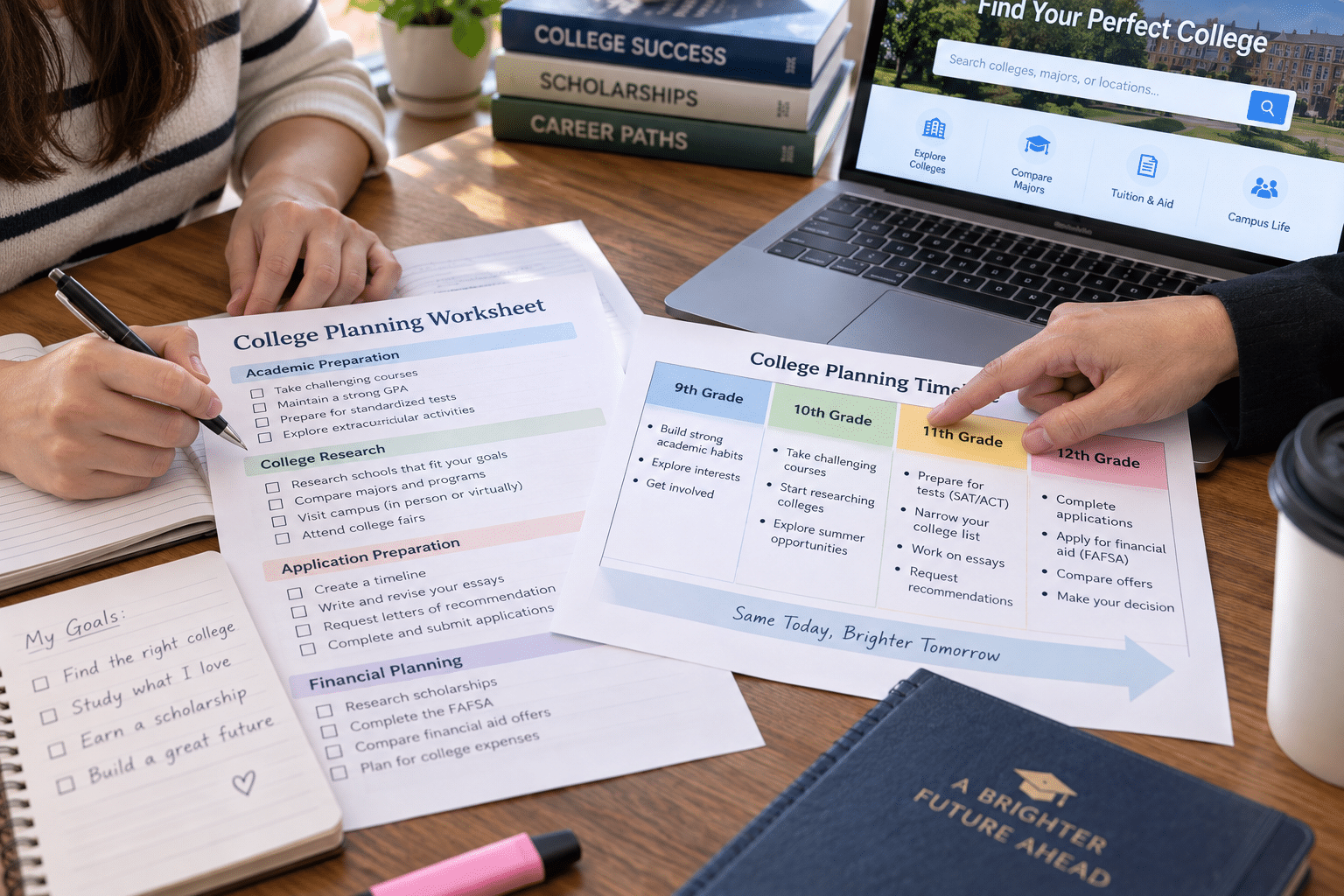
Freshman year is about building a strong academic foundation and exploring interests, not locking in a college list. The grades and course choices made in 9th grade count toward a student’s cumulative GPA and set the trajectory for how challenging later coursework can be.
Meeting with a school counselor early in the year to map out a four-year course plan helps ensure a student is positioned for Advanced Placement or honors courses later, since many of those have prerequisites. Trying out several extracurricular activities — clubs, sports, volunteer work — gives students time to find genuine interests rather than padding a resume at the last minute. College Planning Source’s Early College Planning program is built specifically around this stage, helping families identify which activities and experiences will meaningfully strengthen an application well before senior year.
When Should Students Take the PSAT?
Most students take the PSAT in 10th grade as practice, then again in 11th grade, when the score also qualifies students for National Merit Scholarship consideration. Schools administer the test, typically in October, and in most cases it doesn’t require separate registration.
A 10th-grade PSAT score gives an early, low-stakes read on strengths and weaknesses before the SAT or ACT carries real stakes. By junior year, that same test format carries more weight — a qualifying score opens the door to National Merit recognition, which can factor into scholarship offers at some colleges.
What Should Sophomores (10th Grade) Do Differently From Freshmen?
Tenth grade is when test prep and college research start layering on top of the academic and extracurricular foundation built freshman year. Students should continue building GPA and involvement while adding PSAT preparation and, where possible, a practice ACT or SAT.
This is also a reasonable year to start lightly researching colleges — not to finalize a list, but to get a general sense of size, location, and program types that appeal. Waiting until junior year to start this exploration often means rushing decisions that benefit from more time to develop.
What Should Juniors (11th Grade) Prioritize?
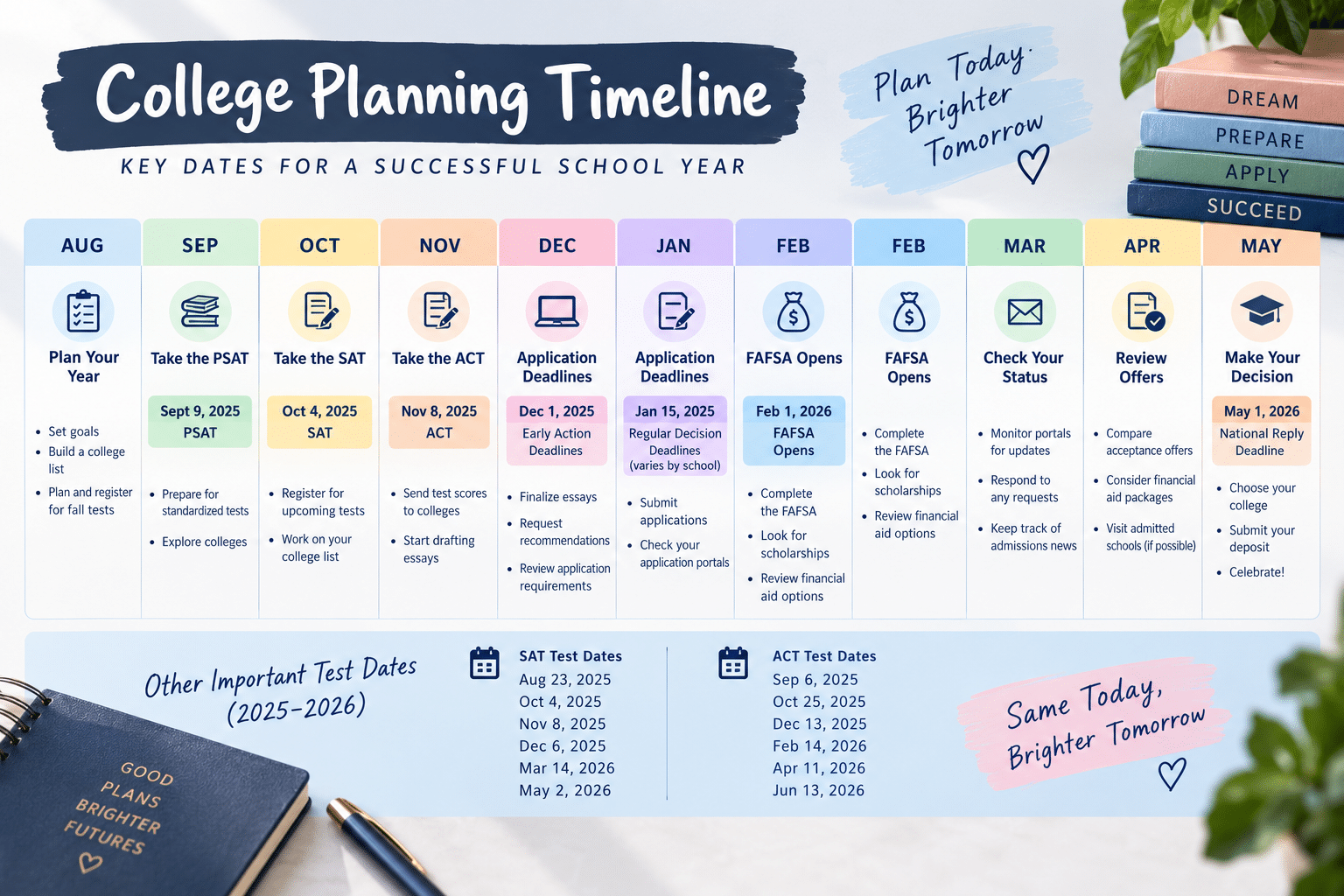
Junior year is the busiest year in the timeline: standardized testing, narrowing the college list, securing recommendation letters, and starting the college essay all typically happen in this single year. Most students take the SAT and/or ACT in the spring of junior year, with a second attempt often scheduled for the fall of senior year if needed.
Testing and Coursework
Junior-year grades and course rigor carry significant weight in admissions decisions, since they’re often the most recent full-year record colleges see at the time of application. Students should also take the PSAT/NMSQT in the fall for National Merit consideration and register for spring SAT/ACT dates well in advance.
College List and Essays
By spring of junior year, a solid draft college list should be underway, with campus visits scheduled where possible over spring break or summer. Starting the college essay before senior year begins is one of the most consistently recommended steps, since it separates essay-writing from the pressure of managing applications and coursework simultaneously. College Planning Source’s Prime College Planning program targets this exact window, helping 10th and 11th graders understand testing requirements, GPA expectations, and essay planning.
What Should Seniors (12th Grade) Expect?
Senior year is execution: finalize the college list, submit applications, file the FAFSA, and make a final decision. The Common Application typically opens August 1, and most Early Action and Early Decision deadlines fall around November 1, with Regular Decision deadlines commonly in January.
| Milestone | Typical Timing |
|---|---|
| Common App opens | August 1 |
| Early Action / Early Decision deadlines | Around November 1 |
| FAFSA opens | October 1 |
| Regular Decision deadlines | Commonly January 1–15 |
| Decision notifications | Late March–early April |
| Enrollment deposit deadline | May 1 (National Decision Day) |
Seniors should also secure at least two letters of recommendation early in the fall, since teachers and counselors are often writing for multiple students at once. College Planning Source’s Crucial College Planning program is built around this final stretch, helping families balance college selection strategy, application tracking, and essay review during the busiest year of the process.
When Should You Start Planning for Financial Aid?
Financial aid planning should start well before senior year — ideally as early as 9th grade — because savings and financial strategy have more time to work in a family’s favor the earlier they begin. However, families don’t file the FAFSA until senior year, when it opens October 1 for the following academic year.
Families who wait until senior year to think about college costs often miss opportunities that require lead time, like adjusting how assets are structured or identifying scholarship programs with early eligibility windows. College Planning Source’s Essential College Funding guidance is designed to start this planning early, including access to private scholarship databases and personalized funding plans.
Is It Too Late to Start Planning in Junior or Senior Year?

No — starting in junior or even senior year is still workable, but it compresses timelines that are normally spread across several years into a shorter, higher-pressure window. The core tasks (testing, essays, list-building, applications) don’t change; there’s just less runway to complete them without overlap.
Students starting late benefit most from prioritization: locking in a testing plan first, then a realistic college list, then essays, rather than trying to do everything in parallel. This is also where working with a college admissions counselor tends to have the highest impact, since a structured plan can prevent late-starting families from missing deadlines entirely.
Why Work With College Planning Source for Your Admissions Timeline?
College Planning Source’s programs map directly onto the four-stage timeline outlined above — Early College Planning for 9th grade, Prime College Planning for 10th and 11th grade, Crucial College Planning for 12th grade, and Essential College Funding for financial planning at any stage. Its College Admissions Counselors work with families on course selection, extracurricular strategy, standardized testing plans, essay review, and application tracking, while its Financial Advisors — with more than 15 years of experience — provide cost-of-attendance breakdowns, scholarship database access, and personalized funding plans. Families can currently access a free interactive admissions timeline tool and schedule a complimentary one-on-one assessment with a Certified College Planning Counselor.
Frequently Asked Questions
What grade should you start planning for college?
Ninth grade is the recommended starting point, since course selection, GPA, and extracurricular involvement from freshman year all factor into a student’s eventual application, even though applications themselves aren’t submitted until senior year.
How many times should a student take the SAT or ACT?
Most students take the SAT and/or ACT at least twice — often once in spring of junior year and again in fall of senior year — with a PSAT in 10th or 11th grade serving as practice beforehand.
When is the best time to visit colleges?
Spring break or the summer of junior year is a common window for official campus visits, since students have a developing sense of preferences by then but still have time to adjust their list before senior-year applications begin.
Do you need a college counselor to stay on track?
No, but a structured plan reduces the risk of missing deadlines or under-preparing for testing and essays, particularly for families managing the timeline for the first time or juggling multiple children’s timelines at once.
When does the FAFSA open each year?
The FAFSA opens October 1 for the following academic year and should be filed as early as possible, since some aid programs are awarded on a first-come, first-served basis.
Ready to Build Your Student’s College Admissions Timeline?
Whether your student is just starting 9th grade or already deep into junior year, College Planning Source can help map out exactly what to prioritize next — from course selection and testing to essays, applications, and financial aid. Families can get started with the free interactive admissions timeline tool or schedule a complimentary one-on-one assessment with a Certified College Planning Counselor.
At College Planning Source, we help students and families navigate every step of the college admissions process. Get direct one-on-one guidance with a complimentary virtual college planning assessment—call 858-676-0700 or schedule online at collegeplanningsource.com/assessments.