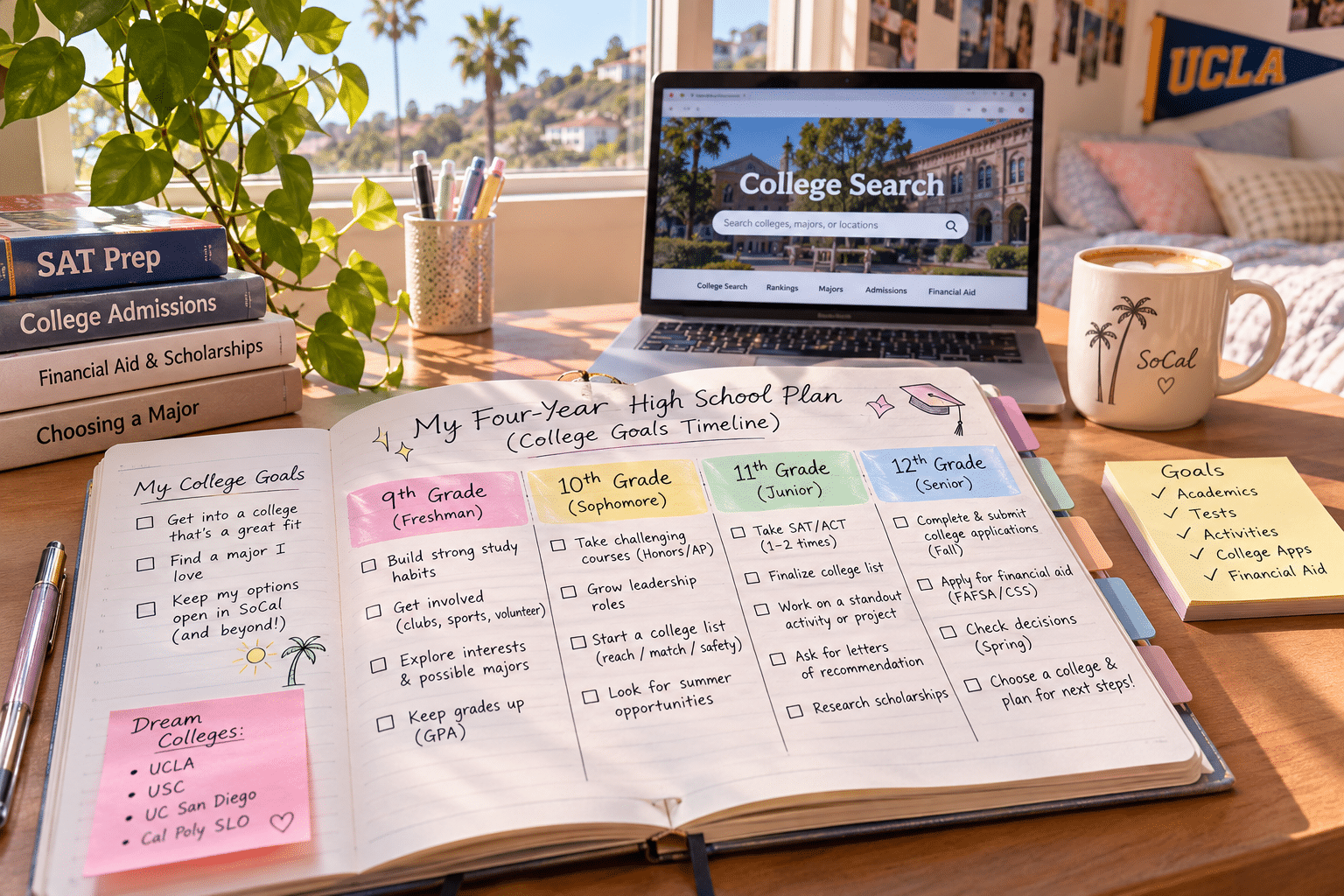
College goals planning helps you get into your dream school by turning a big, distant ambition into specific targets for each year of high school. Students who set goals early choose the right courses, protect their GPA, build meaningful activities, plan testing on time and apply to a balanced list of schools. Instead of scrambling senior year, they arrive at application season with a strong record and a clear strategy.
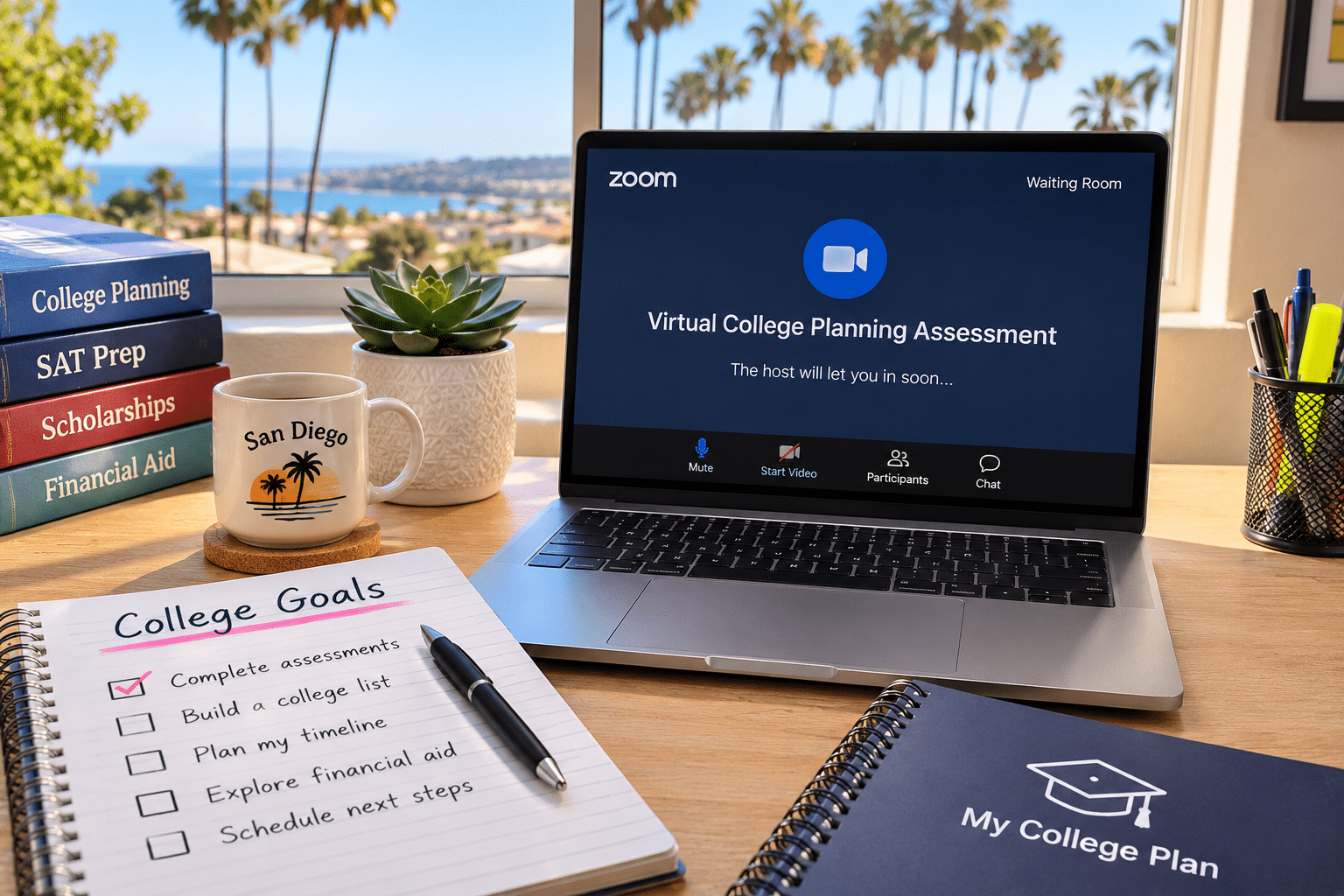
For families in San Diego and across Southern California, College Planning Source has helped students build exactly this kind of plan since 2005. College Planning Source offers grade-specific programs from ninth grade through senior year, plus a college funding program for parents. Every family can begin with a complimentary one-hour virtual college planning assessment with a counselor, which reviews where the student stands today and maps the next steps toward their goals.
Quick Takeaways
- College goals planning breaks the admissions process into yearly targets for academics, testing, activities, applications and financial aid.
- Colleges weigh grades in college prep courses and the strength of a student’s curriculum most, so academic goals matter from ninth grade on.
- California students aiming for UC or CSU schools need to plan around the A through G course requirements early, since most must be finished before senior year.
- A balanced college list that includes reach, match and likely schools protects your dream school goal instead of replacing it.
- College Planning Source offers a free one-hour virtual assessment to help families set goals and build a timeline.
What Is College Goals Planning?
College goals planning is the process of defining where a student wants to go after high school and then setting measurable, time-bound goals that make that outcome realistic. It covers course selection, GPA targets, testing, extracurricular growth, college research, essays, deadlines and paying for college, all organized by grade level.
The difference between planning and simply hoping is specificity. “I want to go to UCLA” is a wish. “I will take honors chemistry this year, keep a 3.9 weighted GPA, and spend the summer volunteering at a hospital to explore pre-med” is a plan. Good goals are small enough to act on this semester but connected to a long-term outcome.
Why Does Setting Goals Early Improve Your Admission Chances?
Planning college goals early improves admission chances because the factors colleges value most are built over four years, not one application season. According to the National Association for College Admission Counseling, four-year colleges rated grades in college prep courses, overall grades and curriculum strength as the most important factors in the Fall 2023 admission cycle.
In that NACAC data, 76.8 percent of colleges placed considerable importance on grades in college prep courses, 74.1 percent on total high school grades, and 63.8 percent on the strength of the high school curriculum. Without college goals planning, a student who decides in eleventh grade that they want a highly selective school may already have missed the chance to take the advanced courses that school expects.
When Should Students Start College Goals Planning?
Most students benefit from starting college goals planning in ninth grade, when every course and grade still counts toward the final transcript. Starting in tenth or eleventh grade still works well, but there are fewer opportunities to adjust course rigor or build long-term activities. Even seniors can benefit from a focused plan for applications and aid.
Here is how goals typically shift by grade:
| Grade | Primary Focus | Example Goals |
|---|---|---|
| 9th grade | Foundations | Build study habits, choose a college prep course path, try two or three activities |
| 10th grade | Direction | Take more rigorous courses where appropriate, deepen one or two activities, explore possible majors |
| 11th grade | Positioning | Research and visit colleges, plan any testing, take leadership roles, start a draft college list |
| 12th grade | Execution | Finalize a balanced list, write essays, meet every deadline, file aid forms, compare offers |
What Kinds of College Goals Should Students Set?
Effective college goals planning covers five areas: academics, testing, activities, applications, and finances. Each area supports the others, and a weakness in one can limit options even when the rest of the profile is strong. The most effective goals are specific, measurable, and reviewed at least once each semester.
Academic Goals
Academic targets are the backbone of college goals planning, so set GPA targets and choose course rigor each year. If your dream school expects four years of math or an extra lab science, build that into your schedule early.
Testing Goals
Some schools require or recommend the SAT or ACT, while others do not consider scores. As part of your college goals planning, decide in tenth or eleventh grade whether testing fits your list, and leave time to retake it.
Activity, Application and Financial Goals
In college goals planning, depth beats a long list of memberships, so aim to grow one interest into leadership or a sustained project. Application goals cover essays, recommendations, and deadlines, while financial goals cover saving, scholarships, and aid forms.
How Do You Turn a Dream School Into a Realistic Plan?
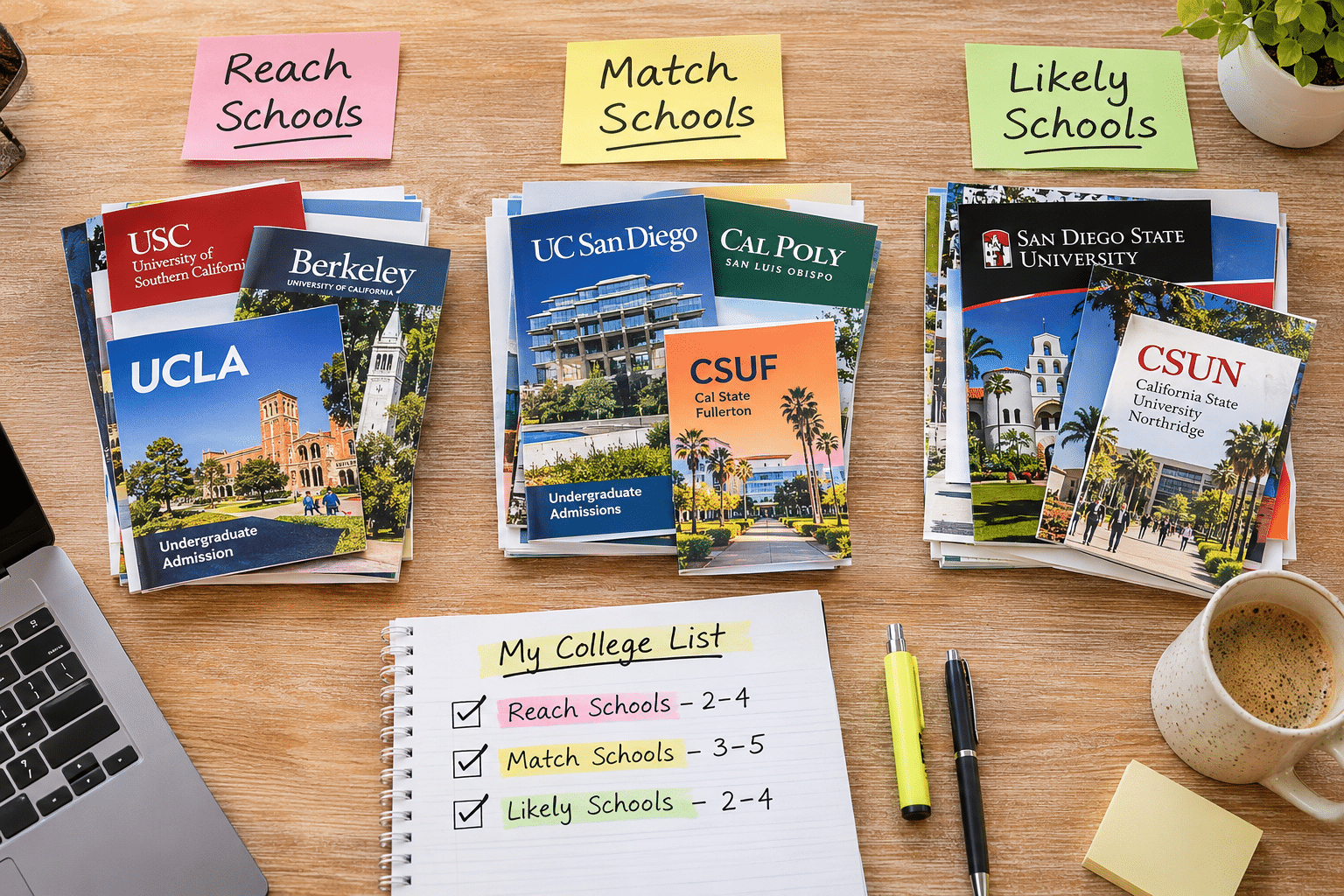
College goals planning turns a dream school into a realistic plan by researching what that school expects, comparing it to where you are now, and setting goals to close the gap. At the same time, build a balanced list of reach, match, and likely schools so one admission decision never determines your entire future.
A simple process looks like this:
- Research the target. Look up the school’s required courses, typical GPA range, testing policy, and the majors it is known for.
- Assess the gap. Compare your current transcript, activities, and interests to that profile.
- Set semester goals. Choose two or three concrete actions per term, such as adding an honors course or starting a summer project.
- Build the list. Add match and likely schools that share what you love about the dream school, whether that is a major, location, or campus size.
- Review and adjust. Revisit the plan each semester and update it as grades, interests, and finances change.
What Should California Students Know About UC and CSU Goals?
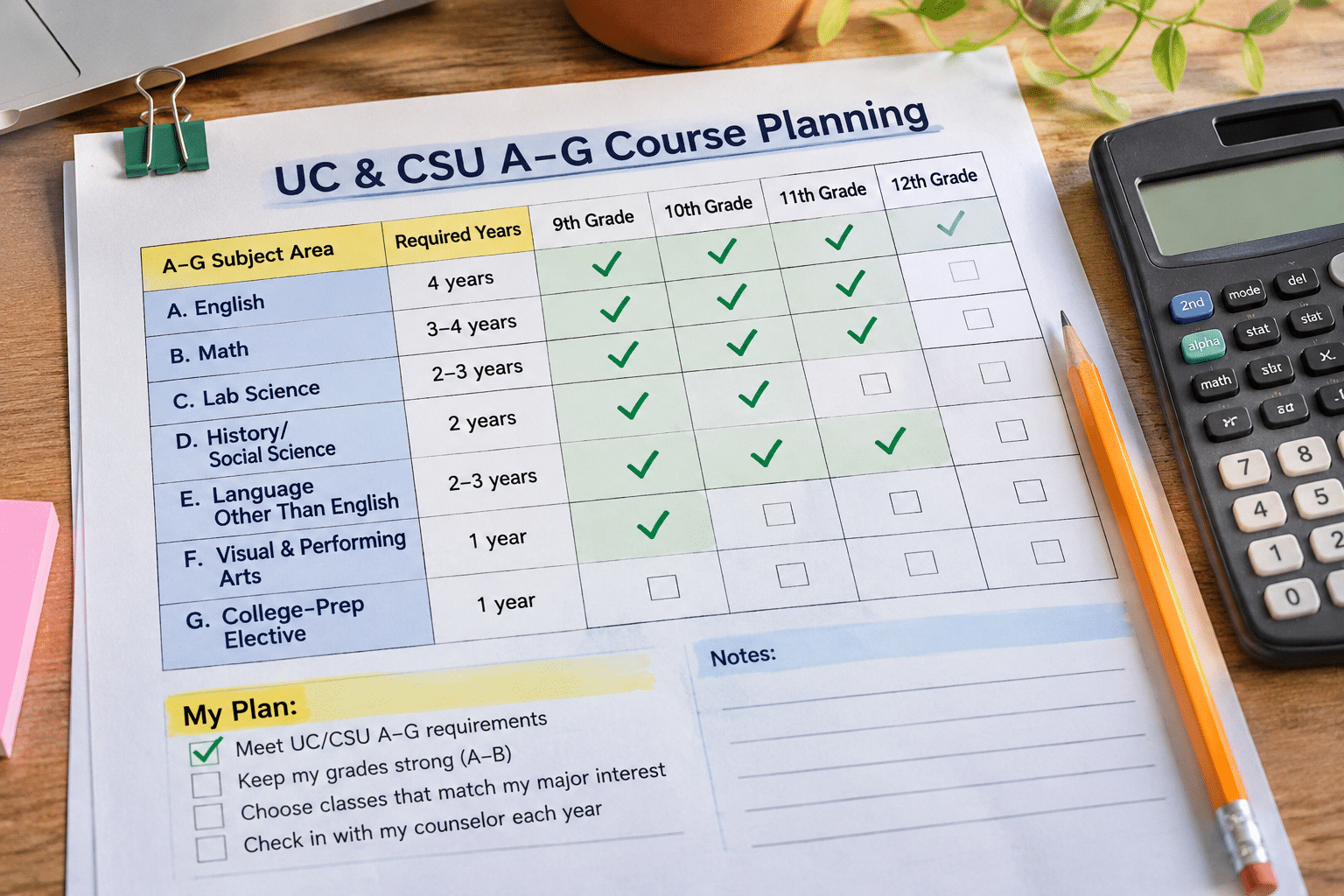
California students aiming for the University of California or California State University systems need to plan around the A through G subject requirements. Both systems require 15 year-long college prep courses in specific subjects, and UC expects at least 11 of them to be completed before senior year, so college goals planning for California students should start with the course schedule.
UC requires a minimum 3.0 GPA in A through G courses for California residents, and CSU requires a 2.5. Those are minimums, not competitive targets. Popular campuses such as UCLA, UC Berkeley and UC San Diego routinely admit students well above them. Neither system currently considers SAT or ACT scores for admission, so California students targeting UC or CSU may put more of their energy into grades, course rigor, activities and the UC Personal Insight Questions.
How Does Financial Planning Fit Into College Goals?

Financial planning belongs inside college goals planning because cost often decides where a student actually enrolls, even after an acceptance. Setting financial goals early helps families understand what they can afford, how aid formulas work, which schools offer strong merit scholarships and when to file the FAFSA and CSS Profile.
Many families treat money as a senior year question, but the earlier it enters the plan, the more options remain. A college list built with both admission chances and likely cost in mind avoids the painful situation of being admitted to a dream school that the family cannot realistically pay for.
Is Working With a College Planning Counselor Worth It?
Working with a counselor on college goals planning is often worth it for families who want structure, personalized strategy, or help with financial aid, especially when school counselors carry large caseloads. The value depends on your student’s goals, how independent they are, and how much guidance your family can provide on its own.
| Situation | Recommendation |
|---|---|
| Self-motivated student with strong school support | Free resources and periodic check-ins may be enough |
| First-generation college family | Personalized guidance can explain steps families have not seen before |
| Student aiming for highly selective schools | A long-term strategy that starts by tenth grade adds the most value |
| Family worried about cost | Combined admissions and funding planning helps build an affordable list |
Why Choose College Planning Source for College Goals Planning?
College Planning Source is a San Diego college planning firm founded in 2005 by Michelle Mai, who worked in the financial aid office while attending UC Santa Barbara. The firm brings admissions and college funding guidance together, which helps families set goals that are both ambitious and affordable.
Its programs are built around each stage of high school. Early College Planning serves students up to ninth grade. Prime College Planning supports tenth and eleventh graders with testing, transcripts, GPA and essay topics. Crucial College Planning helps seniors with a balanced college list, essay review and application tracking. Essential College Funding gives parents funding plans, guidance on financial aid and access to a private scholarship database.
Counseling sessions take place over Zoom, so students can meet with their counselor from home, and the office is located at 10875 Rancho Bernardo Road, Suite 115, in San Diego. Families who want to learn first can also join the firm’s free live webinars on admissions, financial aid and college funding.
Frequently Asked Questions
These are the questions San Diego families ask most often when they begin college goals planning.
What is the best age to start college goals planning?
Ninth grade is an ideal time to start college goals planning because every course and grade from freshman year forward appears on the transcript colleges review. Starting then gives students time to choose a rigorous path, explore interests and build activities gradually. Students who start in tenth or eleventh grade can still build a strong plan with a tighter timeline.
Can college goals planning help with scholarships?
Yes. College goals planning helps students qualify for more merit scholarships by keeping grades and course rigor strong and by targeting schools that reward their profile. It also builds time to research private scholarships and meet aid deadlines. Families who plan early typically have more ways to reduce out-of-pocket costs than those who start in senior year.
Is it too late to plan if my student is a senior?
It is not too late. College goals planning in senior year still helps with a focused plan that finalizes a balanced college list, strengthens essays, organizes deadlines and prepares financial aid forms. Senior year planning has less room to change the transcript, so the focus shifts to presenting the student’s existing record as clearly and strategically as possible.
What happens during a free college planning assessment?
At College Planning Source, the free assessment is a one-hour virtual meeting with a college planning specialist. It can cover career and major interests, testing timelines, activities, deadlines, merit scholarships, a financially balanced college list and the family’s funding plan. Families leave with a clearer picture of where the student stands and a starting point for college goals planning.
Start Building Your Dream School Plan With College Planning Source
Your dream school is not a single decision made senior year. It is the result of hundreds of small choices made with a clear goal in mind. College goals planning gives your student that clarity, and the earlier it starts, the more options stay open.
College Planning Source has helped San Diego and Southern California families plan for admissions and college funding since 2005. Schedule your complimentary one-hour virtual college planning assessment to review your student’s current profile, set goals for this year and map a path toward the schools they care about most.
At College Planning Source, we help students and families navigate every step of the college admissions process. Get direct one-on-one guidance with a complimentary virtual college planning assessment—call 858-676-0700 or schedule online at collegeplanningsource.com/assessments.